Math
We are two weeks in to our second unit, working with place-value structures and multi-digit computation. In this unit, students are working on how to:
• read, write, order, model, compare, and identify the place value of digits in numbers to 999
• estimate and calculate sums (addition) of 2-digit numbers with and without regrouping (i.e., carrying)
• estimate and calculate differences (subtraction) between 2 -digit numbers with and without regrouping (i.e., borrowing)
• estimate and measure length in both inches and centimeters
• continue to master basic addition and subtraction facts. Try these games for additional practice:
The pre-assessment for this unit was very helpful in showing the gaps in kids' understanding of place-value, and is guiding current instruction. Working with Base-Ten pieces, the class is composing and decomposing various two and three digit numbers at a variety of challenge levels, looking carefully at the connections between a number's Base-Ten minimal collection and how it is written numerically. We've also practiced sketching and writing expanded notation (ex: 289 = 200 + 80 + 9).
 |
| Click here to try the game "Base Ten Fun" and get some extra practice! :-) |
Students also practiced estimating, measuring, and graphing lengths of objects in the classroom, their salmon stream drawings - even the circumference of today's pumpkins from the patch!


Writing
Students have finished publishing choice writing pieces, and soon will be working on personal narratives - exploring the structure of a narrative, how to pre-write using a graphic organizer, and make revisions and edits. Over the last few days students have been free-writing in their writer's notebooks, nature journaling outdoors, taking notes on nonfiction texts about Chinook and salmon, and writing comments and thoughts about the current read-aloud both online and in their Reader's Notebooks.
Reading
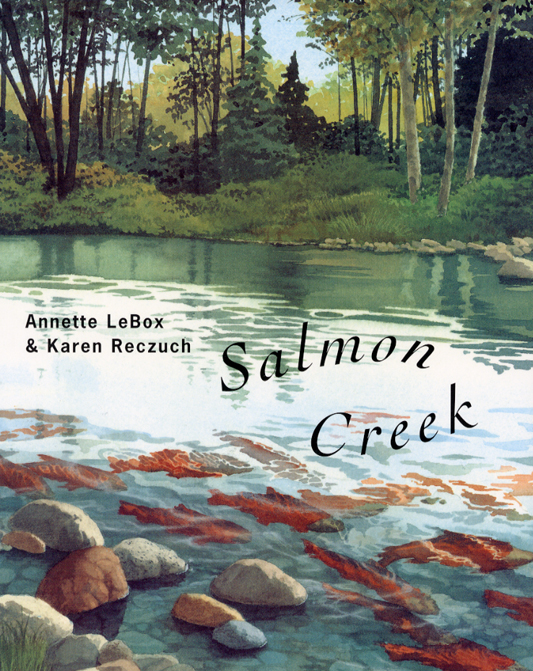
Last week we read nonfiction about salmon to build up our background knowledge for the Friday trip to Eagle Creek, as well as our class stewardship of the salmon incubation tank. We practiced using nonfiction text features like the table of contents, index, and glossary to find information we needed, as well as how to use text features like headings, bold print, and captions to zoom in on specific facts. Students created thought-maps using the iPad app Popplet to document their thinking as they learned new information:
.JPG)
This week, we've launched our read aloud Kutkos - Chinook Tyee by Mildred Colbert. Out of print, this book was written in 1942. Author Mildred Colbert's grandmother was Chinook Amelia Aubichon Petit (featured in the recent book “Legendary Locals of The Long Beach Peninsula” by Sydney Stevens.) Mildred was raised in the historic Colbert house in Ilwaco, Washington and educated at Columbia University. She was a 4th grade teacher in Ilwaco, Washington and Portland, Oregon! She was known as the family historian and very proud of her Chinook heritage.


Social Studies
Our Chinook storyline continues to be highly engaging. Students researched and built a miniature village of Chinook cedar plankhouses, and worked very well collaborating with their "clan" to create a historically accurate diorama based on notes, drawings, and readings from nonfiction texts. Kids had spirited discussions about whether or not to include totem poles, how to build things to scale, what to include inside the home, and more - leading to some authentic problem-solving and application of their learning. Now, students are creating characters to inhabit the village - and in doing so, learning about social status/clan roles as well as the workaday lives and clothing of the Chinook.

Science
Our babies arrived! Hopefully, you have heard all about our Chinook salmon eggs and incubation tank, as well as last Friday's field trip to view the wild Coho salmon spawning at Eagle Creek. At school, the kids will be raising these Chinook salmon eggs until they are fry and ready for release into the wild. The kids did a great job on the field study connecting their observations to their classroom learning as we walked the stream and explored the banks to watch this critical part of the salmon life cycle. Coupling this with the raising of our Chinook salmon eggs in the school incubation tank, these kids will have direct, first-hand experience of the entire salmon life cycle.
Watch this slide-show video of our salmon field study! Thank you for the photos, chaperones!
Reminders, etc.
- Halloween Party Tomorrow (1-8th Grade costume parade at 1:45, followed by a pumpkin-decorating party in the classroom)- Plankhouse field trip next Tuesday Nov. 5 (get those permission slips in!)
-Monthly field study @ Wapato next Thursday Nov. 7 - focus: Native uses of plants
That's the news for now!
Warm regards,
Asa

No comments:
Post a Comment